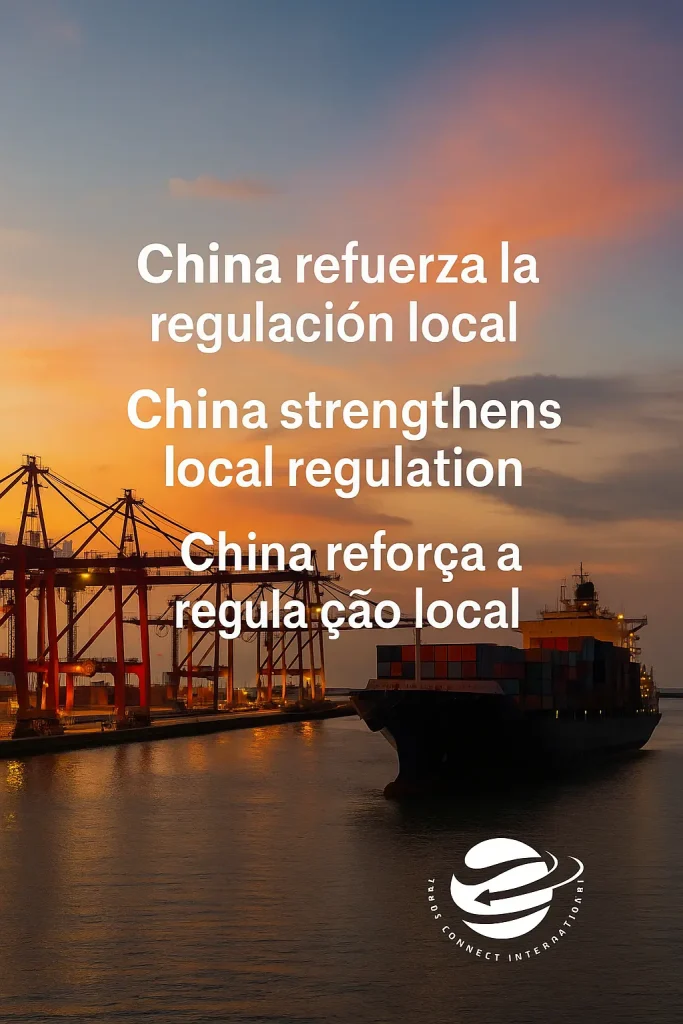
In recent months, China has significantly tightened its export licensing and compliance system. The goal is to improve product traceability and ensure regulatory transparency across all exported goods — a move that reshapes global trade dynamics.
For companies importing machinery, raw materials, or finished products from China, this shift brings both new challenges and unique opportunities. In this new framework, having a local presence — through a representative office, a trusted partner, or a sourcing team— has become essential to maintain reliable operations.
Section 1: What the new controls mean
Since late 2025, all export operations from China must be carried out under verified licenses issued directly by manufacturers or authorized distributors.
This change impacts international buyers in several ways:
- Longer customs clearance times for unlicensed operations.
- Mandatory digital documentation and stricter compliance checks.
- Restrictions on unregistered intermediaries.
- Priority for verified exporters with full traceability and legal status.
Companies operating without a local partner may face delays, added costs, or compliance risks in the new regulatory environment.
Section 2: Adapting and finding opportunity
While the new regulations may appear restrictive, they also create an opportunity to build stronger, more transparent global supply chains. Businesses working with local partners or offices inside China can:
- Negotiate directly with factories and access better terms.
- Inspect products before shipment to ensure quality.
- Combine shipments to optimize freight costs.
- Ensure documentation and licensing accuracy
At Trade Connect International, our China-based team supervises every stage of the export process — from supplier verification to shipment coordination — ensuring that all goods are properly licensed and compliant. This direct local oversight allows our clients in the Americas, Europe, and Oceania to operate with full confidence.
Section 3: Market trends
Industry estimates suggest that over 35% of Chinese exporters have updated their export licenses or compliance systems during 2025 (estimated data). By 2030, most export processes are expected to be fully digitalized, incorporating traceability, quality control, and transparent documentation.
At the same time, global buyers increasingly demand verified suppliers and local representation, strengthening the value of networks like TCI’s integrated sourcing and logistics structure.
Conclusion
China’s new export control framework signals a new era of international trade — one built on compliance, transparency, and reliability. Companies that act now to establish local presence and trusted partnerships will secure a long-term advantage in the global market.
At Trade Connect International, we help our clients every step of the way — from sourcing and negotiation to inspection and global logistics.