
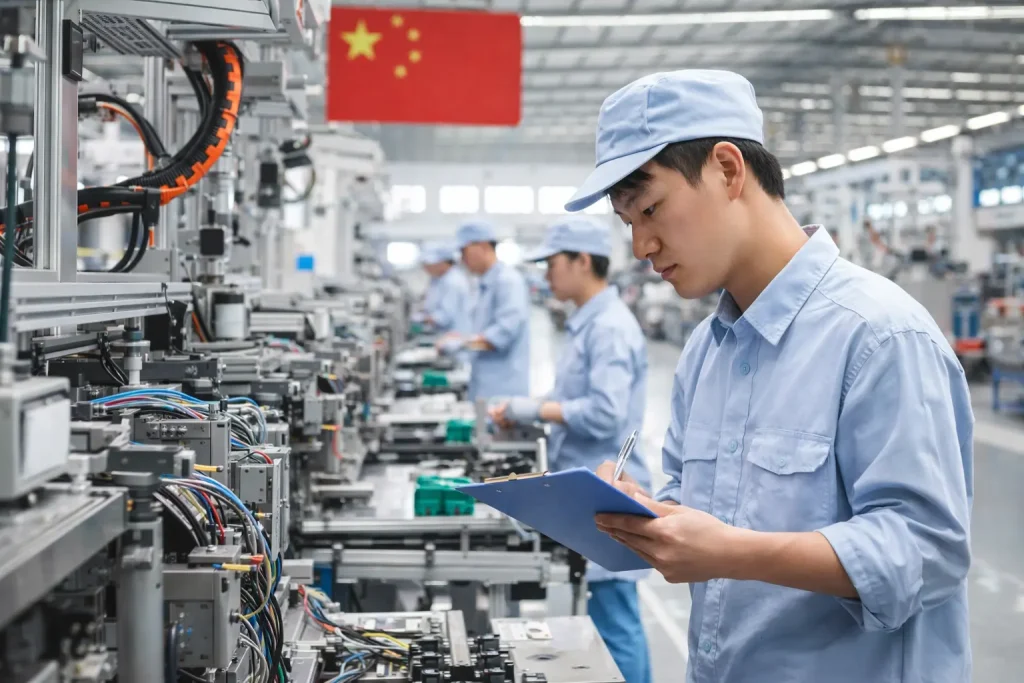
China continues to consolidate its position as one of the world’s leading industrial hubs. However, in recent years the Chinese government has begun reinforcing regulations in key industrial sectors with the goal of improving quality standards, energy efficiency and environmental control.
These changes are having a direct impact on the country’s production structure and also on international companies that depend on Chinese suppliers.
A shift in industrial policy
Chinese authorities have intensified controls across several manufacturing sectors, particularly in industries with high energy consumption or environmental impact.
Some of the measures implemented include:
• stricter environmental controls • energy efficiency requirements • more rigorous factory inspections • reorganization of industrial zones
The objective is to promote a more technological, efficient and internationally aligned industrial sector.
Impact on suppliers and manufacturers
For many Chinese manufacturers, these regulations require investments in technological modernization, improvements in production processes and adaptation to new operating standards.
In some cases, smaller factories with lower compliance levels have had to close or merge with larger companies.
This process is reshaping China’s industrial ecosystem.
What it means for international importers
For companies importing from China, these changes may have several effects:
• reduction in the number of available suppliers in certain sectors • more professional manufacturing operations • improved quality standards • possible adjustments in production costs
While short-term adjustments may occur in supply chains, these measures aim to strengthen the long-term competitiveness of Chinese industry.
The importance of working with reliable suppliers
In a scenario where industrial regulations are becoming stricter, selecting the right manufacturers is increasingly important.
Supplier verification, quality control and production monitoring are key factors in ensuring safe international trade operations.
The role of Trade Connect International
At Trade Connect International we work directly with manufacturers and suppliers in different international markets.
Our operational presence in Asia allows us to assist companies looking to develop safer import operations by identifying reliable suppliers, verifying production processes and coordinating international trade activities.
Conclusion
The evolution of industrial regulations in China is part of a broader transformation of global trade. For companies involved in international commerce, understanding these changes and adapting to them will be essential to maintain efficient and competitive supply chains.